
Byron–Tweed Hope Spot Biodiversity Citizen Science Project
Discover it. Record it. Help protect it.
Help us put biodiversity on the map across our Byron–Tweed Hope Spot!
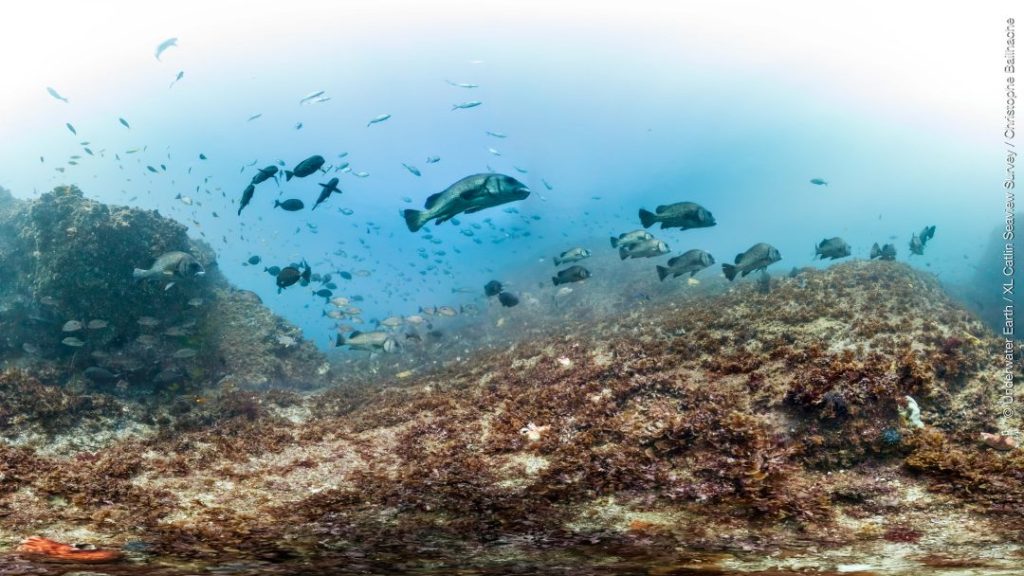
From rivers and estuaries to beaches, rocky shores, coastal wetlands, reefs and offshore waters, the Byron–Tweed Hope Spot is home to an extraordinary diversity of marine and coastal life.
And you can help us discover and protect it!
This project is part of our Ocean Champion Program, we’re inviting our community to get involved in grass-roots action for conservation.
How to get involved
Become a biodiversity citizen scientist in four easy steps!
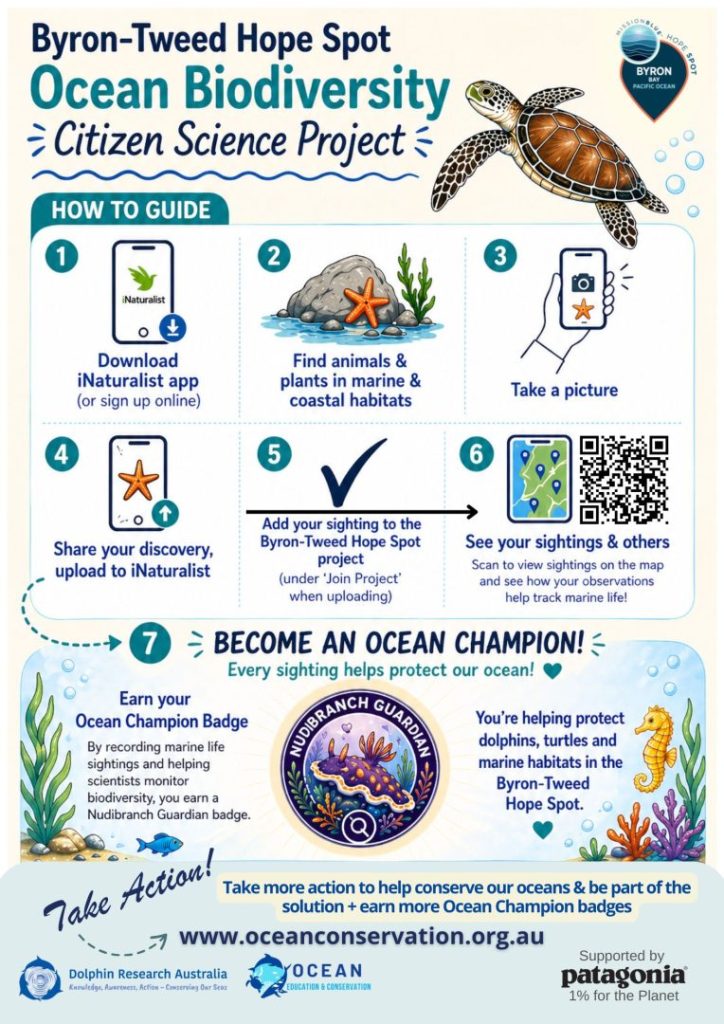
1. Get iNaturalist
Download the free iNaturalist app or visit www.inaturalist.org and create an account.
2. Join our Byron–Tweed Hope Spot Project
Visit our Byron–Tweed Hope Spot iNaturalist Project and join our community of biodiversity observers.
3. Explore our FREE online citizen science training
Our free Ocean Citizen Science Workshop introduces you to citizen science, biodiversity observations and how to use iNaturalist to contribute to our Hope Spot Project.
4. Explore, observe and photograph
Head outdoors and discover the wildlife around you! Whether you’re exploring a rockpool, snorkelling over a reef or walking along the beach, photograph the wild species you encounter.
Remember to observe wildlife responsibly and avoid disturbing animals or damaging habitats.
5. Upload your observations
Add your photographs to iNaturalist, including the date and location. Identify the species if you can, or let the iNaturalist community help.
Check that your eligible observations are included in our Byron–Tweed Hope Spot Project.
Why are we recording biodiversity?
Understanding what lives here helps us protect it.
The Byron–Tweed Hope Spot is part of a globally significant region for marine biodiversity, where tropical and temperate species overlap and a rich diversity of habitats supports an incredible variety of life.
But our coastal and marine ecosystems face growing pressures from pollution, habitat degradation, coastal development, climate change and increasing human activities.
Understanding what species occur across our region, where they are found and how their distributions change over time is essential for effective conservation.
Yet there are still significant gaps in our knowledge of coastal and marine biodiversity.
That’s where you come in!
By bringing together observations made by people across our community, we can build a much bigger picture of biodiversity than researchers could achieve alone.
Every observation adds another piece to the puzzle.
Your observations can help us:
- Document biodiversity – Build a growing record of the incredible species found across our Hope Spot.
- Fill knowledge gaps – Improve our understanding of species distributions and the habitats they occupy.
- Detect environmental changes – Record seasonal patterns, unusual species sightings and potential changes in distributions over time.
- Identify conservation priorities – Contribute information that may help identify ecologically important areas and habitats requiring further investigation or protection. #
- Support marine conservation – Build biodiversity knowledge within and beyond marine protected areas to help inform research, conservation planning and management.
- Strengthen community stewardship – Connect people with nature and inspire collective action to protect our coastal and marine ecosystems.
- Create a lasting biodiversity legacy – Contribute to a long-term community biodiversity dataset for future research and conservation.
Together, small observations can make a big difference for our oceans.