
Create a Wildlife-Friendly Backyard
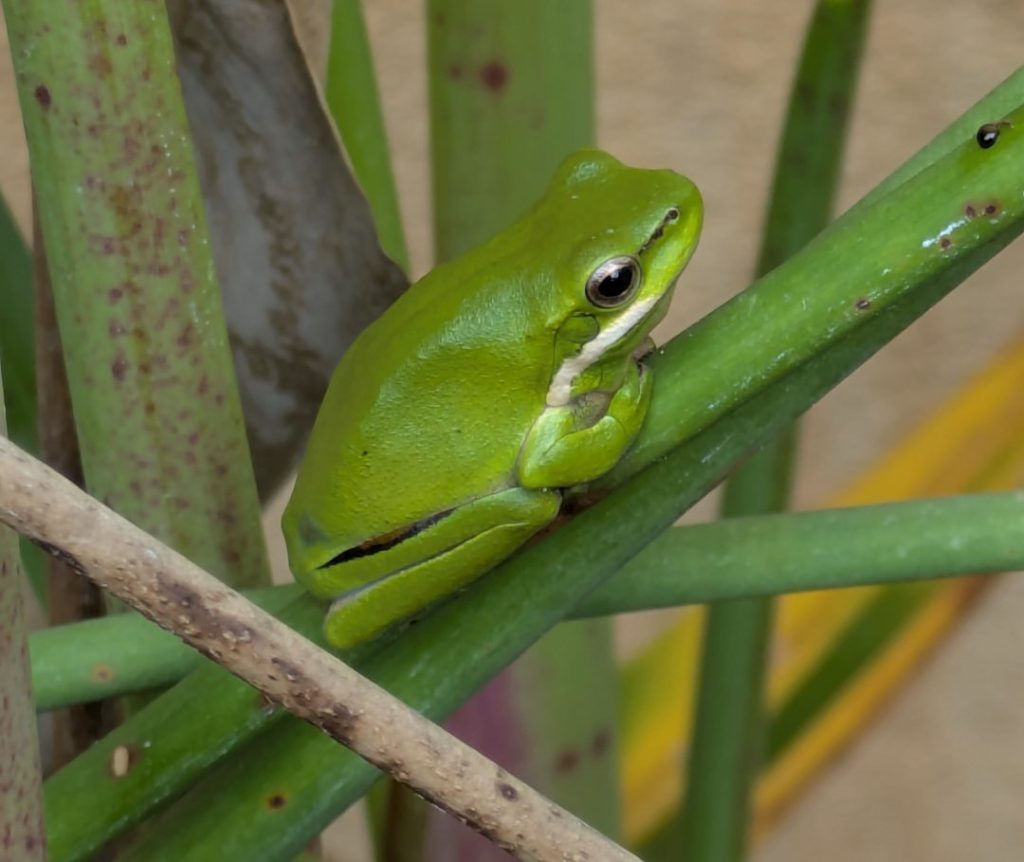
Rewild your patch for wildlife, waterways & our ocean
Every Patch Counts
You can help wildlife and biodiversity no matter how small or large your backyard. Gardens, courtyards, balconies and even pots can provide valuable habitat.
Habitat loss and fragmentation are among the major drivers of declines in both biodiversity and populations, reducing the places where plants and animals can survive, reproduce and move across the landscape.
Globally, monitored wildlife populations have declined by an average of 73% between 1970 and 2022 (WWF Living Planet Report).
Our urban gardens can become stepping stones and corridors to help connect fragmented habitat across our towns and neighbourhoods.
From Backyard to Ocean – how does helping habitat in your patch help the ocean?
The land, aquatic and ocean ecosystems are intricately connected.
What happens in our backyards and neighbourhoods can influence the health of ecosystems far beyond our fences — all the way to our creeks, estuaries and coastal waters.
When we create habitat by planting local native species, protecting healthy soils and increasing vegetation, we’re doing more than providing food and shelter for birds, butterflies, bees and other wildlife.
We’re also helping restore some of the natural processes that support healthy waterways and marine ecosystems.
Native plants, insects, birds and other wildlife form part of interconnected food webs. Many species move between terrestrial and aquatic environments, and are important species that link different habitats through the food webs.
In addition, vegetation located along waterways provides food, shelter and organic material that can support aquatic life.
Healthy vegetation and soils also help manage rainwater, reducing erosion and the movement of sediment into waterways. This is particularly important for downstream habitats such as seagrass meadows, which depend on sufficient sunlight reaching underwater plants.
Every garden, courtyard and green space has the potential to become part of a wider network of habitat.
By creating wildlife-friendly spaces, we can help:
- Reconnect fragmented habitats: Native gardens can act as stepping stones between larger natural areas, helping birds, pollinators and other wildlife move through our urban landscapes.
- Support biodiversity: Diverse native vegetation provides food, shelter and breeding opportunities for wildlife, helping strengthen local ecosystems.
- Protect our soils: Plant roots, groundcovers and leaf litter help stabilise soil, reduce erosion and support healthy soil ecosystems.
- Support healthier waterways: Vegetation and healthy soils can help rainwater soak into the ground, slow surface runoff and reduce the movement of sediment into creeks and estuaries.
- Build climate resilience: Trees and other vegetation provide shade, cool local environments and help ecosystems better withstand environmental change.
Where to start? Or how do I build on what I have?
Start with observing your patch – how much sunlight does it get, how much salt spray and wind, what type of soil do you have and what is there already. Using such fundamental elements of gardening will help you select the right plants for the right conditions.
Plants are the key
Choose local native plants that naturally occur in your area as much as possible.
In the changing climate, however, you may also want to look into species that are already adapted to the future predictions for your area. For example, if your located in area that is likely to become hotter and drier than current averages in the coming decades due to climate change – choose native plants from nearby regions that are already adapted to similar expected conditions.
Your local native nursery will be the best place to source the plants you’re looking for. If they don’t have the plant you’re after, your can ask them to get them in or for a suitable alternative.
Choosing a variety of plants is a great way to provide food and habitat for a variety of native wildlife – but it also helps to get multiple of the same species to ensure there is enough food.
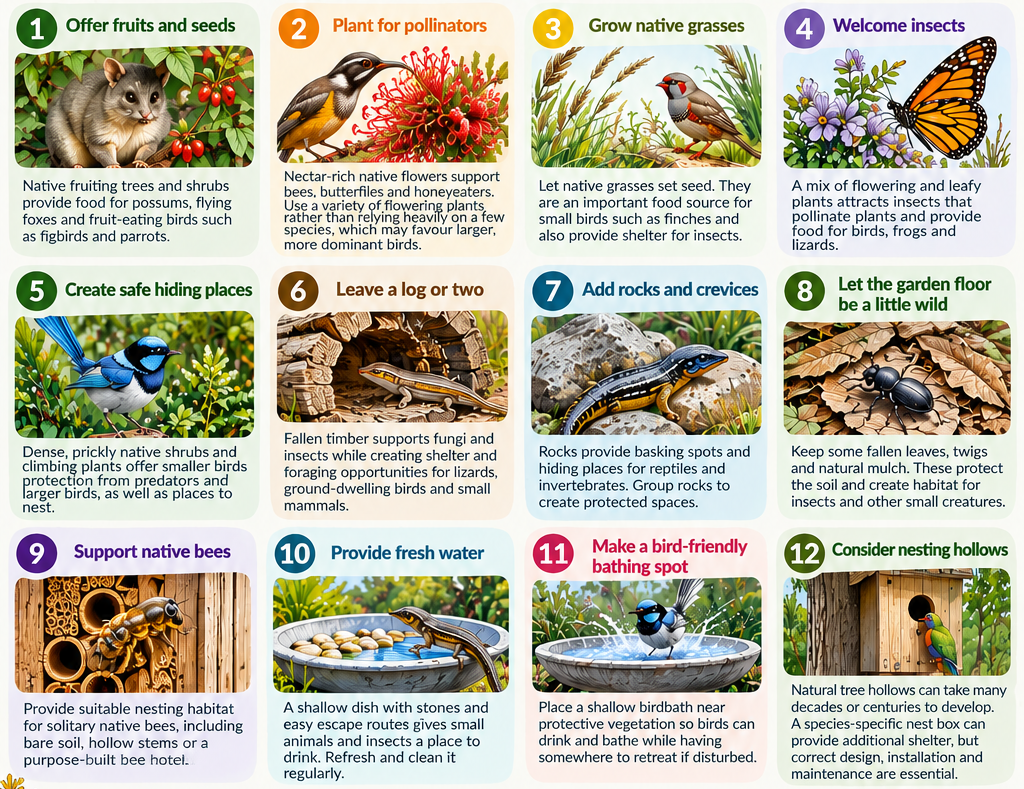
Make your own Rewild Your Patch Plan
Check out our Rewild Your Patch Plan to help guide you through your next steps.
 Take An Ocean Champion Pledge & Make your Garden Wildlife Friendly
Join the global movement to create positive change by taking a simple everyday action. Take a pledge and share with your friends and community on social media. Choose an action and pledge to make a change. Simply write on a piece of paper or digitally and take a photograph and share on your social media. Don’t forget to tag us @ocean_education_conservation and @dolphin_research_australia !
Resources we’ve found particularly useful…
Planting for Native Birds, Bees and Butterflies is an illustrated garden guide written by Jaclyn Crupi and published by Murdoch Books
Tweed Landcare Native Plant Guides
Climate Resilient Landscapes booklet by Brunswick Valley Landcare
There are some amazing resources offered by local council’s as well. So don’t forget to check out your local council’s website. Don’t forget to check out your local council’s resources too