
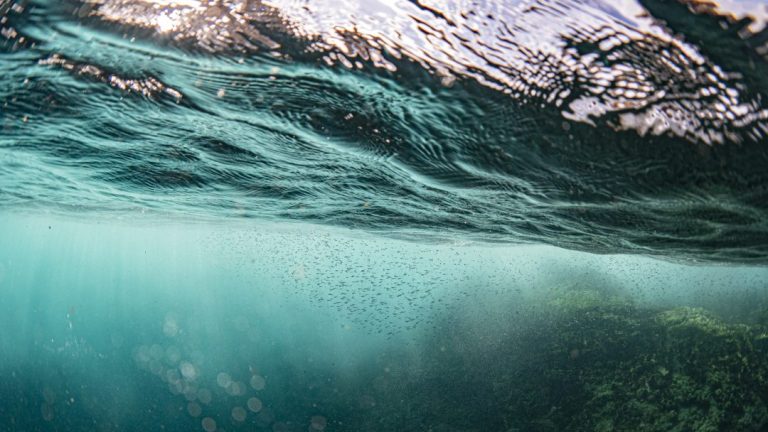
Some common sunscreen ingredients—especially oxybenzone and octinoxate—can harm marine life even in tiny amounts. When washed off in the ocean, they can stress or damage coral larvae, make corals more vulnerable to bleaching, and disrupt the growth and reproduction of marine organisms. These chemicals can also build up in coastal waters, especially in popular swimming areas. Choosing mineral sunscreens (zinc oxide or titanium dioxide in non-nano form) helps reduce this impact.
How Can I Tell If A Sunscreen Is OK For The Ocean?
Check the active ingredients –
-
- Better for the ocean: non-nano zinc oxide, non-nano titanium oxide
- Potentially harmful: Oxybenzone (benzophenone-3), Octinoxate (ethylhexyl methoxycinnamate), Octocrylene, Homosalate, 4-MBC, PABA, Benzophenone-4 (If you see the harmful ones in the “active ingredients” list, it’s best to avoid.)
- Here’s a great summary of the chemicals commonly used in sunscreen, and what to avoid.
Look for “non-nano” – Nano-sized mineral particles can be more easily ingested by marine organisms. “Non-nano” zinc oxide/titanium dioxide is generally considered safer.
Ignore vague marketing terms – Terms like “reef safe” or “ocean friendly” aren’t regulated. They can be helpful hints but shouldn’t be trusted alone—always check the ingredients.
Choose lotions instead of sprays – Sprays create more airborne particles that fall onto sand and wash into the ocean. Lotions reduce this.
Check for certifications – Some third-party labels (e.g., Protect Land + Sea Certified) test products for harmful chemicals. These are more reliable than generic “reef safe” claims. Some sunscreens also offer bonuses like plastic free or palm oil free certifications.
Making the switch to an ocean friendly sunscreen, and encouraging others to do the same, is a great pledge you can make to help protect our oceans and their inhabitants.
 Take An Ocean Champion Pledge And Switch To Ocean Friendly Sunscreen
Join the global movement to create positive change by taking a simple everyday action. Take a pledge and share with your friends and community on social media. Choose an action and pledge to make a change, rewild your backyard and help save the bees to save the seas. Simply write on a piece of paper or digitally and take a photograph and share on your social media. Don’t forget to tag us @ocean_education_conservation and @dolphin_research_australia !