
Mining, Oil & Gas Exploration
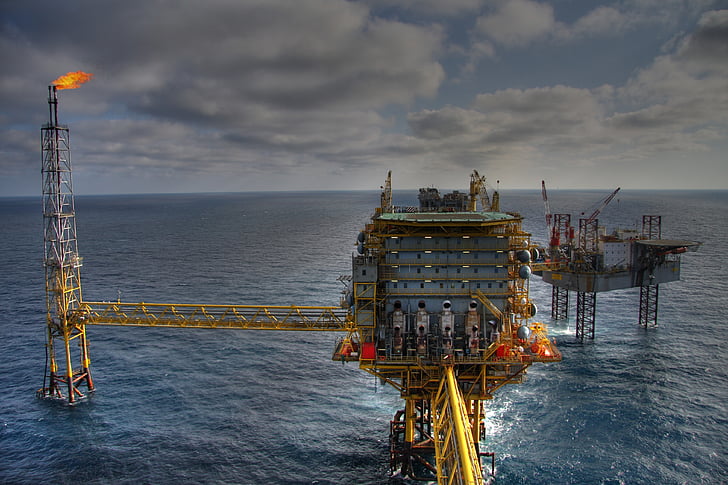
Mining, Oil & Gas Exploration
Mining, oil, and gas activities represent some of the most disruptive industrial pressures on our oceans. Offshore drilling, subsea infrastructure, seismic exploration, and seabed disturbance threaten marine wildlife, degrade habitats, pollute coastal waters, and contribute to climate change. As these industries expand into deeper and more remote areas, their impacts on marine ecosystems are becoming increasingly significant.
Pollution, Spills & Chronic Contamination
Offshore oil and gas operations introduce pollution into the marine environment through routine discharges, leakage, and catastrophic spills. Even “small” operational spills can have long-lasting ecological consequences.
Major global incidents illustrate the scale of impact:
- The Deepwater Horizon disaster released ~780,000 m³ (4.9 million barrels) of oil into the Gulf of Mexico, contaminating over 100,000 km² of ocean and killing hundreds of thousands of marine animals (NOAA, 2016).
- More than 8,000 km of coastline were affected by oil spill events worldwide between 2010–2019 (ITOPF, 2020).
- Cleanup efforts recover only a fraction of spilled oil — often less than 15% (ITOPF, 2020).
Oil pollution is toxic to seabirds, dolphins, whales, turtles, fish, and invertebrates. It damages feathers and fur, harms respiratory systems, contaminates breeding grounds, and reduces reproductive success. Hydrocarbon residues can persist in sediments for decades.
Underwater Noise, Habitat Disturbance & Wildlife Impacts
Industrial activities generate intense underwater noise, including:
- Seismic airgun arrays used for oil and gas exploration
- Drilling rig operations
- Pipeline installation
- Vessel traffic associated with offshore platforms
Seismic airguns are among the loudest human-made noises in the ocean, reaching 230–260 dB re 1 µPa, and can disrupt marine mammal behaviour across thousands of square kilometres (Nieukirk et al., 2012). Exposure has been linked to displacement, feeding disruption, mask communication, and increased stress levels.
Drilling platforms also introduce light pollution, waste discharge, and seafloor disturbance. Anchors, pipelines, and subsea engineering damage benthic habitats — including deepwater corals and sponges, some of which grow only millimetres per year and may be hundreds to thousands of years old.
Climate Change & Fossil Fuel Expansion
The expansion of offshore oil and gas conflicts directly with global climate commitments. Fossil fuel combustion remains the largest driver of global warming, ocean acidification, and marine heatwaves. Studies show:
- To limit warming to 1.5 °C, nearly all known reserves of fossil fuels must remain unextracted (UNEP, 2023).
- Offshore production accounts for 30% of global oil extraction and is rising in some regions (IEA, 2022).
A warming ocean means more coral bleaching, more severe storms, stronger marine heatwaves, and declining oxygen levels — all exacerbated by fossil fuel emissions.
Deep-Sea Mining: A Growing Threat
Deep-sea mining represents an emerging industry with the potential to become one of the most damaging marine activities ever undertaken. It targets mineral-rich seafloor regions such as abyssal plains, seamounts, and hydrothermal vents — some of the most biodiverse and least understood ecosystems on Earth.
What Is Deep-Sea Mining?
Companies are seeking to extract:
- Polymetallic nodules (containing cobalt, manganese, nickel)
- Seafloor massive sulphides from hydrothermal vents
- Cobalt-rich crusts on seamounts
These deposits form extremely slowly — nodules, for example, grow only millimetres per million years.
Ecological Impacts
Scientific assessments warn of severe, irreversible damage:
- Mining vehicles create plumes of sediment that can smother deep-sea animals over kilometres (Levin et al., 2020).
- Many deep-sea species have very limited ranges and extremely slow life cycles — making recolonisation nearly impossible.
- Hydrothermal vent communities may be permanently destroyed; many species found there exist nowhere else on Earth.
- Deep-sea habitats store significant amounts of “blue carbon,” which mining could release, contributing to climate change.
A major review published in Science concluded that deep-sea mining will cause biodiversity loss “unavoidable on regional to global scales” (Amon et al., 2022).
Global Pause & Calls for Moratorium
Growing scientific concern has led to calls for a moratorium or ban:
- More than 800 marine scientists and policy experts have signed a global statement calling for a pause on deep-sea mining (DSCC, 2023).
- Over 20 countries, including France, Germany, Chile, and New Zealand, now support a moratorium, precautionary pause, or ban.
- Several major companies — including BMW, Volvo, Google, and Samsung — have committed not to purchase minerals from deep-sea mines.
- Australia is currently under pressure to clarify its position as industry interest grows in the Pacific region.
Why It Matters
Deep-sea ecosystems are among the last intact wilderness areas on the planet. They provide essential global functions — including carbon sequestration, nutrient cycling, and biodiversity reservoirs. Once damaged, these ecosystems may never recover.
Pathways Forward
- Protecting marine life from mining, oil, and gas impacts requires:
- Strong environmental regulations and independent assessments
- Exclusion of industrial activities from marine protected areas
- Transitioning away from fossil fuels toward renewable energy
- Ending seismic exploration in sensitive biodiversity hotspots
- Supporting a global moratorium on deep-sea mining
- Investing in ocean-safe technologies and habitat restoration
Healthy oceans cannot coexist with unrestrained industrial extraction. Protecting marine ecosystems means shifting toward sustainable, low-impact energy and mineral alternatives.
Learn How You Can Help & Take Action
___________________________________________________
References
- NOAA (2016). Deepwater Horizon Oil Spill impact summary. https://response.restoration.noaa.gov
- ITOPF (2020). Oil Spill Statistics. https://www.itopf.org/knowledge-resources/data-statistics
- Nieukirk, S. et al. (2012). Acoustic impacts of seismic surveys. https://asa.scitation.org/doi/10.1121/1.3651817
- UNEP (2023). Production Gap Report. https://www.unep.org/resources/report/production-gap-report-2023
- IEA (2022). Offshore Oil and Gas Market Report. https://www.iea.org
- Levin, L. et al. (2020). Deep-sea mining impacts. https://www.nature.com/articles/s41559-020-1221-y
- Amon, D. et al. (2022). Biodiversity risks of deep-sea mining. Science. https://www.science.org/doi/10.1126/science.abo3371
- Deep Sea Conservation Coalition (DSCC) Global Scientist Statement. https://www.seabedminingsciencestatement.org