
White’s Seahorse
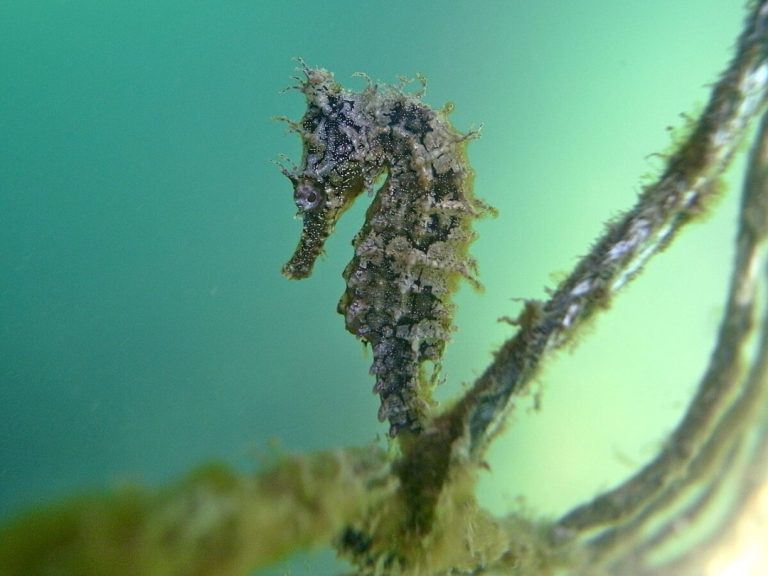
White’s Seahorse
Species: Hippocampus whitei
Status (IUCN): Endangered
Characteristics
- White’s Seahorse, also known as the Sydney Seahorse, is a small, spiny species that grows up to about 16 cm in length. It can vary in colour from pale yellow and cream to brown, grey, or even black—often with small dark spots or mottled patterns that help it blend into its surroundings. Like all seahorses, it swims upright using its tiny dorsal fin for propulsion and curls its prehensile tail to cling onto seagrass, sponges, or artificial structures.
- Life span: 3-5 years
- Breeding/reproduction: White’s Seahorses are monogamous and form long-term pair bonds. During courtship, pairs perform daily greeting rituals involving colour changes and tail-holding dances. Like other seahorses, the male becomes “pregnant”, carrying the developing embryos in a specialised pouch for around two to three weeks before giving birth to tiny, fully formed young. Breeding typically occurs from October to March, when water temperatures are warm.
Habitat
This species is endemic to the east coast of Australia, occurring from Hervey Bay in Queensland to Jervis Bay in New South Wales. It inhabits shallow coastal and estuarine environments, often found clinging to soft corals, sponges, seagrass, and man-made structures like piers and nets. One of its best-known homes is Port Stephens, where it is now the focus of a world-first seahorse conservation program.
Ecology
White’s Seahorses play an important role in maintaining the balance of their coastal ecosystems. They feed on small crustaceans such as mysid shrimp and copepods, using their long snouts to suck up prey. Their presence indicates healthy seagrass and sponge habitats, which also provide nurseries for many fish species. However, because they are relatively sedentary and have limited swimming ability, they are highly sensitive to habitat loss and water quality changes.
Fun Fact
The White’s Seahorse is one of only two seahorse species listed as endangered in the world. It has become a flagship species for marine conservation in New South Wales, helping raise awareness of the importance of seagrass and estuarine habitats.
Threats
- Habitat loss and degradation due to coastal development, dredging, and boat activity
- Pollution and declining water quality in estuaries
- Storm events and climate change, which damage seagrass and sponge communities
- Bycatch and entanglement in protective swimming nets
- Limited dispersal ability, making local populations highly vulnerable to decline
How You Can Help
- Protect seagrass and estuarine habitats by reducing pollution and runoff from land.
- Avoid anchoring in seagrass beds and keep a safe distance when boating near shallow areas.
- Support marine sanctuaries and citizen science projects that monitor seahorse populations.
- Reduce plastic use to prevent debris entering waterways.
- Spread awareness about the importance of these tiny but mighty ocean guardians!
You can also Join our Tweed Seagrass Citizen Science Project! Get in touch! info@dolphinresearchaustralia.org